Rethinking Leadership in Energy: Why Curiosity, Creativity and Community Are Becoming Critical Infrastructure
The energy, power and renewables sector is no stranger to transformation. Technologies evolve, policy shifts, and markets tighten and expand. Beneath all of that visible change, a quieter transition is taking place, one that may ultimately prove just as consequential. Leadership itself is being redefined.
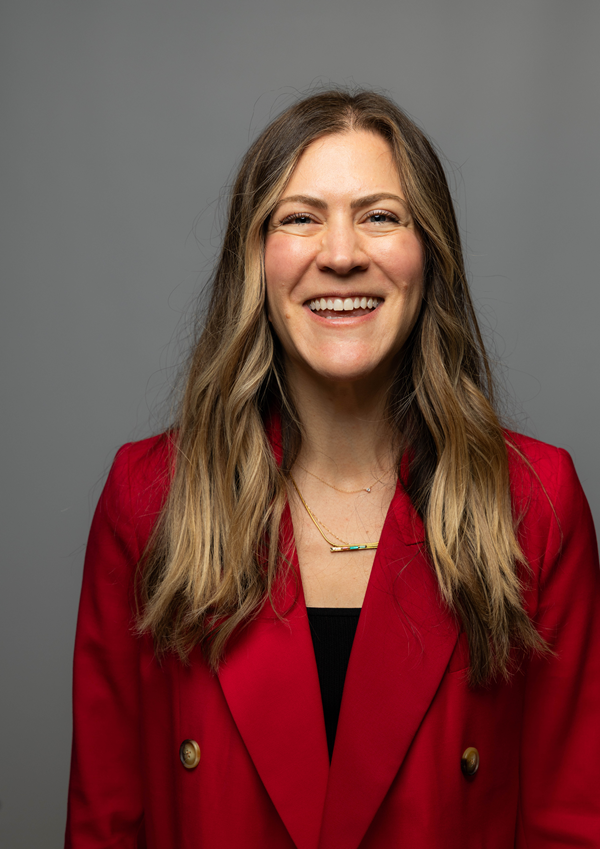
In a recent conversation on The Talent Current, former Solar Energy Industries Association (SEIA) CEO and President Abby Hopper offered a perspective that cuts through the noise of megawatts, markets and mandates. What emerges is a clear signal. The future of the energy sector will not be shaped by technology alone, but by how people lead, connect and solve problems.
At the centre of this shift is a move away from rigid, top-down leadership toward something more adaptive and human. Hopper’s approach is disarmingly simple but deeply strategic. “What problem are we trying to solve?” she said, describing how she would open meetings.
“Before you tell me what we’re gonna do, help me understand what problem we’re trying to solve.”
In an industry often driven by urgency, including grid constraints, policy deadlines and project timelines, that question can be easy to overlook. Yet it is precisely this clarity that enables better outcomes. Hopper’s philosophy challenges a common failure point across energy organisations, which is action without alignment. When teams rush to execution, they risk solving the wrong problem or limiting themselves to familiar approaches.
Her emphasis on creativity is not about innovation theatre or abstract thinking. It is practical, grounded and essential in a sector navigating complexity at scale. “There were lots of different ways to accomplish something,” she explained. “You can do that through going and meeting with them, writing op-eds, making funny videos, or having an event back in their district.”
This is a reminder that influence in energy, whether shaping policy, building public support or driving adoption, requires more than technical expertise. It demands creative engagement. As the sector grapples with issues such as grid flexibility, market design and the integration of emerging technologies, the ability to think beyond conventional pathways is becoming a competitive advantage.
Perhaps the most striking theme from Hopper’s reflections is not creativity, but community.
After stepping away from nearly a decade leading SEIA, Hopper has spent time reconnecting with the industry in a different way through curiosity and through people. Her work with “Solar Sisters,” an initiative focused on service, growth and connection, reflects a broader shift in how professionals in energy are finding purpose.
One experience in particular stands out. Partnering on a project in Puerto Rico, Hopper described working alongside other women to install solar and storage at a domestic violence shelter. The impact extended far beyond the infrastructure itself.
“The relationships we built… and the connections we made… really grounded me in like, yeah, this is why I care so deeply about this work and this is why this work really matters.”
For an industry often framed in terms of capacity, cost curves and carbon reduction, this is a powerful recalibration. It underscores that energy is ultimately about people, including communities, resilience, access and equity. As decentralised systems, distributed generation and localised solutions become more prominent, that human dimension will only grow in importance.
This evolution in leadership is also challenging long-standing norms around how professionals show up at work. Hopper spoke candidly about rejecting the idea that leadership must conform to a single archetype. “I actively do not aspire to be kind of the typical leader,” she said, pushing back against models that prioritise authority over collaboration.
Instead, her approach centres on openness and authenticity. In practice, that means creating space for individuals to bring their full selves into professional environments. It acknowledges that careers in energy are often balanced alongside caregiving, family responsibilities and personal challenges.
This is not a soft shift. It has hard implications for how organisations attract and retain talent. As the sector faces ongoing workforce shortages, particularly in renewables and infrastructure, culture is becoming as critical as compensation. Leaders who foster psychological safety and genuine connection are better positioned to build resilient, high-performing teams.
Hopper also draws a sharp distinction between being “nice” and being “kind,” a nuance that carries weight in high-stakes environments. “Nice is sort of people pleasing,” she said.
“Kindness is like a deep belief in wanting what’s best for another person… clear is kind.”
In an industry defined by complex stakeholder dynamics that include developers, regulators, investors and communities, this clarity matters. Avoiding difficult conversations or masking challenges does not serve long-term progress. Directness, delivered with respect, is not only more effective but essential for trust.
There is also a broader context shaping these leadership shifts. Hopper points to a growing interest in areas such as grid-integrated technologies, market governance and the intersection of policy with artificial intelligence. These are not isolated trends. They signal an industry becoming more interconnected, more data-driven and more politically nuanced.
Navigating this landscape requires leaders who are not only technically fluent but intellectually curious. Hopper describes this period of her career as one of rediscovery, spending time reading, exploring and “focusing on the parts that I find that I’m curious about.” That curiosity is not indulgent. It is strategic. In a sector where change is constant, the ability to continuously learn is foundational.
What does this mean for organisations operating across energy, power and renewables?
It means recognising that talent strategy can no longer be separated from leadership philosophy. The companies that will lead the next phase of the energy transition are those that embrace new ways of thinking about problem-solving, about people and about purpose.
They will be the ones asking better questions before rushing to answers. They will create environments where ideas can surface and be challenged. They will understand that infrastructure is not just physical, but cultural.
They will also be the ones investing in leaders who can operate at that intersection.
The energy transition is often described in terms of systems change. Increasingly, it is also a story of human change.
Listen to Abby's full episode and discussion with Mindy here: 'The Talent Current' Podcast.